Best Launch Monitor for Outdoor Driving Range Practice in 2026: 5 Portable Picks by Budget
Our top picks
 Best overall for the range: 6-hour battery, 1.1 lb, no subscription, about $1,149FlightScope Mevo Gen2Radar + camera · behind the ball · 15 ft+ room depth8.5Price tier: Mid-rangeCheck price on Amazon
 Best budget range unit: 10-hour battery, IPX7, 0.33 lb, about $499.99Garmin Approach R10Radar · behind the ball · 14 ft+ room depth7.9Price tier: BudgetCheck price
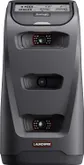 Best camera unit for the range: GC3-grade cameras, 6-hour battery, about $1,995Bushnell Launch Pro Circle B EditionCamera (photometric) · beside the ball · 13 ft+ room depth8.0Price tier: Mid-rangeCheck price
 Best no-phone range unit: built-in screen and voice, no plan, about $499.99Voice Caddie SC4 PRO (Swing Caddie)Radar · behind the ball · 13 ft+ room depth7.3Price tier: BudgetCheck price
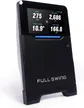 Best premium radar: 16 metrics including face angle, about $3,995.95Full Swing KITRadar · behind the ball · 16 ft+ room depth8.2Price tier: PremiumCheck price
The best launch monitor for an outdoor driving range is the FlightScope Mevo Gen2 for most golfers: it’s light, runs about 6 hours on a charge, measures spin and has no subscription. If you want the cheapest unit that still goes everywhere, the Garmin Approach R10 costs about $499.99 and is rated for up to 10 hours of battery.
Range use is a different job from a garage simulator. You carry the unit in a bag, set it up on a mat or turf in a minute or two, and care about battery, weight, apps and what it costs to keep using. This guide ranks the units that work outdoors by those things. As elsewhere on the site, it’s research-based: we haven’t tested these units ourselves, test results name the outlet that ran them, and prices are Amazon’s on November 12, 2026. Several were on early Black Friday pricing when we checked, so expect them to move.
Quick picks
| Pick | Type and placement | Battery | Weight | Price | Best for |
|---|---|---|---|---|---|
| FlightScope Mevo Gen2 | Hybrid, behind the ball | 6 hrs | 1.1 lb | ~$1,149 | Most golfers, no plan |
| Garmin Approach R10 | Radar, behind | up to 10 hrs | 0.33 lb | ~$499.99 | Budget and portability |
| Bushnell Launch Pro | Camera, beside | 6 hrs | 5 lb | ~$1,995 | Camera accuracy |
| Voice Caddie SC4 PRO | Radar, behind | up to 10 hrs | 1.3 lb | ~$499.99 | Phone-free practice |
| Full Swing KIT | Radar, behind | 5 hrs | 4 lb | ~$3,995.95 | Full data, face angle |
Battery figures are the makers’ ratings from our model data. Bushnell lists 5 to 7 hours for the Launch Pro, so we use its 6-hour midpoint.
What matters on an outdoor range
Five things separate a good range monitor from a good simulator monitor:
- Battery. A bucket session can run an hour or two. A unit rated for 2–4 hours is a risk; one rated for 6 or more is comfortable.
- Weight and setup. Anything you carry should be quick to place and level. A 0.33 lb R10 and a 9 lb R50 are different propositions.
- Where it sits. Radar goes behind you, camera units go beside the ball, and both need to be on your hitting surface or the mat.
- How data reaches you. Most units need a phone or tablet in the sun. A few have their own screen.
- Plans and balls. Some units want special balls or a membership before the numbers you care about appear.
One thing we couldn’t ground in our sources: how each unit copes with bright sunlight. Neither the makers’ pages nor the reviews we cite say, so we haven’t ranked on it. If you play in strong glare, check the screen or app on your phone first, since that is where most glare problems show up.
Best overall: FlightScope Mevo Gen2
The Mevo Gen2 is the monitor we’d pick for most range golfers. It weighs 1.1 lb, runs on a 6-hour battery that charges over USB-C, and has a built-in camera that helps with alignment. FlightScope calls its tracking Fusion Tracking: 3D Doppler radar with image processing, so spin is measured and not calculated. Data goes to the FS Golf app on a phone or tablet.
The ownership costs are the real draw. The app, putting and 8 lifetime E6 Connect courses come with no subscription, so the three-year cost can stay at the hardware price. The one-time Pro Package (about $1,748 with the unit on Amazon) adds club path, face angle and nine more parameters if you want them.
Pros: light, long battery, measured spin, no plan, works with GSPro, E6 Connect and Awesome Golf if you also build a simulator. GOLF.com found carry “spot on” once the ball type was set to range ball, a useful setting when you hit a range’s balls.
Cons: it needs 7–9 ft behind the ball, and Plugged In Golf noted you re-pair by QR code every time you power it on. Breaking Eighty saw occasional outliers, with some indoor drives 5–7 yards off. Club path and face angle cost extra. Check the Mevo Gen2 price.
Best budget range unit: Garmin Approach R10
The R10 is the easiest launch monitor to carry: 0.33 lb, IPX7 waterproof and up to 10 hours of battery. The free Garmin Golf app has a driving range, training-mode stats and automatic swing video, and the app shows club speed, face angle, club path and angle of attack (radar-derived and approximate). You can use it at the range with no plan.
Plugged In Golf found its numbers often in line with a pro unit outdoors and less often indoors, so the range is where the R10 does its best work. The weak spot is spin. It’s calculated from radar data rather than measured, and Plugged In Golf saw it read high on wedges and mishits. Course play at home needs the Garmin Golf membership at $99.99 a year, but you won’t need it at the range.
Pros: cheapest option here, the longest rated battery, tiny and waterproof, no special balls or stickers.
Cons: calculated spin, no putting, and the app runs on your phone. Check the R10 price. For a head-to-head with the Rapsodo, see Garmin R10 vs Rapsodo MLM2PRO.
Best camera unit for the range: Bushnell Launch Pro
If ball data accuracy matters more than weight, the Bushnell Launch Pro is the camera pick. It uses the same three high-speed cameras as the Foresight GC3, has a small touchscreen on the unit and a battery Bushnell lists at 5 to 7 hours. Plugged In Golf saw its ball speed typically match a GCQuad exactly, with spin within tens of rpm; we found no outdoor-specific result, so treat that as a guide to the hardware.
It sits upright about 2 ft from the hitting area, raised to mat level, and weighs 5 lb. That’s less convenient than dropping a radar puck behind you, and its 7 × 10 in hitting zone is small. The free Foresight+ tier shows ball data, but club data needs club stickers and Silver or higher, and course play runs about $494 a year. For range-only use, the free tier is what matters.
Pros: measured spin, camera accuracy, unit-mounted screen, only 13 ft of indoor depth if you also build a bay.
Cons: about $1,995, 5 lb, stickers for club data, no face angle, and it must connect online at least every 45 days. Check the Launch Pro price.
Best no-phone range unit: Voice Caddie SC4 PRO
The SC4 PRO is a practice tool first. It shows 8 metrics on its own screen, reads them aloud and comes with a remote, so you don’t need a phone for basic sessions. It weighs 1.3 lb with a battery rated at up to 10 hours, and Voice Caddie sets it 5 ft behind the ball (4 ft if tight), the shortest radar setup we track. A 3D driving range and 5 E6 Connect courses are included with no plan.
Plugged In Golf found it in line with a GCQuad indoors on virtually every shot except spin, and Breaking Eighty saw spin occasionally miss by 2,000–3,000 rpm. Ball speed and carry are its strengths. Club data stops at club speed and smash factor, and it doesn’t support GSPro.
Pros: about $499.99, no subscription, on-unit display, short setup distance.
Cons: spin can wander, no path or face data, no putting. Check the SC4 PRO price.
Best premium radar: Full Swing KIT
The Full Swing KIT is the pick when you want every number. It’s a 24 GHz dual-mode radar with 16 metrics, including face angle and face-to-path, a 5.3-in OLED screen on the unit and a 5-hour battery. Full Swing says to place it 10 ft behind the ball outdoors. Golf Monthly said it never missed a shot, and Plugged In Golf found distances and launch close to a GCQuad.
Carl’s Place, which sells the KIT, measured average outdoor carry errors of 2.65 yards with a pitching wedge, 3.15 with a 6-iron and 6.25 with driver, with 6 of 20 drives off by 10 yards or more. That’s a retailer’s test, but it’s a reminder that radar numbers on the longest clubs vary.
Pros: full data without an unlock, built-in screen, no Full Swing plan needed.
Cons: about $3,995.95, 5-hour battery, and indoors it needs 16–20 ft. Check the KIT price.
Other outdoor-capable units and who should skip them
- Garmin Approach R50 (about $4,999.99): three cameras beside the tee on a 10-in screen, but 9 lb with a 4-hour battery and a proprietary charger. Today’s Golfer saw about 1 miss per 100 shots outdoors. It’s a simulator unit that also travels, not a range-first choice. See Mevo Gen2 vs Garmin R50.
- Rapsodo MLM2PRO (about $549.98) and MLM2XPRO (about $899.99): measured spin needs Rapsodo’s own RPT balls, the Net environment and a Core membership, so ordinary range balls won’t give you measured spin. Golf Monthly measured only 2–4 hours of battery on the MLM2PRO, and Plugged In Golf found the MLM2XPRO’s short clubs read long outdoors.
- SkyTrak+ (about $995) and ST MAX (about $1,695): both work outdoors on a battery rated for about 5 hours, but SkyTrak’s plan costs $299.99 a year for courses and the ST MAX sits beside the ball, in the line of fire for shanks.
- Skip indoor-only units such as the Uneekor EYE MINI CORE and LITE and the Bushnell Launch Pro i: no battery, mains power and no outdoor use.
Radar vs camera outdoors
Radar units track the ball as it flies, so a long outdoor flight suits them. Our radar vs photometric explainer covers how each works. Indoors, a short flight gives the radar less to read, which is why units like the Mevo Gen2 ask for dots or RCT balls there; FlightScope’s FAQ frames that as an indoor requirement. Those requirements are for indoor spin, so the range is less demanding.
Camera units read the ball at impact, so in principle distance behind the ball doesn’t matter for them. They do need to be level, aligned with the target line and at mat height. Today’s Golfer warned that R50 alignment can skew face and path by a few degrees, so take care when you set one up on a range mat.
How to choose
- Set a budget that includes a plan. Under $500, it’s the R10 or SC4 PRO. Around $1,150 it’s the Mevo Gen2. At about $2,000 you’re into the Launch Pro. Compare plans in our subscription cost guide.
- Count your hours. If you hit for 90 minutes or more, favour the 6-to-10-hour batteries.
- Decide whether spin matters. The R10’s spin is calculated, the SC4 PRO’s can wander, and the Mevo Gen2 and Launch Pro measure it.
- Check the balls. The R10 and SC4 PRO need no special balls (standard balls only on the SC4 PRO). The Mevo Gen2 has a range-ball setting. Rapsodo wants its own RPT balls for measured spin.
- Think about home use. If you plan to add a net or simulator later, see our best launch monitors for home and garage simulator guide. A GoSports 10 × 7 ft net at about $89.99 is a cheap way to use the same unit in the backyard.
Caveats
Maker accuracy figures are claims, and independent results vary by unit, ball and setup. We haven’t tested any of these ourselves. Sun, wind and a sloped range mat can all affect a reading, but we couldn’t find published numbers for how much. If you’re unsure, buy from a retailer with a return window and compare a few shots with a range’s own yardage markers or a coach’s unit.
Bottom line
Buy the Mevo Gen2 if you want one unit that works at the range, in a garage and in a simulator with no plan. Buy the Garmin R10 or SC4 PRO if you want to spend about $500. Pay for the Launch Pro if camera-measured spin is worth it, and the Full Swing KIT if you want face angle too.
Filter every model by budget and outdoor use in the launch monitor matcher, or see them side by side in the comparison chart.
Frequently asked questions
What is the best launch monitor for an outdoor driving range?
Are launch monitors more accurate outdoors than indoors?
How far behind the ball does a radar launch monitor sit at the range?
Do I need a launch monitor with a long battery life for the range?
Do outdoor launch monitors need a subscription?
Can I use the same launch monitor at the range and in a home simulator?
Sources
- Plugged In Golf: Garmin Approach R10 review · checked 2026-11-12 — Outdoors the R10 was often in line with a pro unit, indoors less often; spin read high on wedges and mishits.
- GOLF.com: FlightScope Mevo Gen2 review · checked 2026-11-12 — Carry spot on once the ball type was set to range ball.
- Today's Golfer: Garmin Approach R50 review · checked 2026-11-12 — About 1,000 shots very close to TrackMan and GCQuad, with about 1 in 100 missed outdoors; heavy, stickers needed, proprietary charger.
- Plugged In Golf: Rapsodo MLM2XPRO review · checked 2026-11-12 — Tested indoors with RPT balls and found minimal differences from a GCQuad; outdoors, short clubs read long.
- FlightScope: Mevo Gen2 FAQ · checked 2026-11-12 — Setup 7–9 ft behind the tee; aluminum dots or Titleist RCT balls for accurate indoor spin; no subscription.
- Plugged In Golf: Bushnell Launch Pro Circle B review · checked 2026-11-12 — Ball speed typically matched a GCQuad exactly, spin within tens of rpm and launch within 1 degree.
Get new guides by e-mail
One short e-mail when Home Golf Simulator Guide publishes a new guide. No spam, no sharing your address, and you can unsubscribe in one click.