Best Launch Monitors for Home Use in 2026, by What You'll Actually Do With It
Our top picks
 Best for an indoor simulator: measured spin, putting and GSPro with no plan, about $1,149FlightScope Mevo Gen2Radar + camera · behind the ball · 15 ft+ room depth8.5Price tier: Mid-rangeCheck price on Amazon
 Best for net practice: numbers on its own screen, no subscription, about $499.99Voice Caddie SC4 PRO (Swing Caddie)Radar · behind the ball · 13 ft+ room depth7.3Price tier: BudgetCheck price
 Best for range and home on a budget: 10-hour battery, IPX7, about $499.99Garmin Approach R10Radar · behind the ball · 14 ft+ room depth7.9Price tier: BudgetCheck price
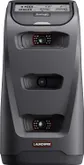 Best for short rooms: side-of-ball cameras, 13 ft minimum depth, about $1,995Bushnell Launch Pro Circle B EditionCamera (photometric) · beside the ball · 13 ft+ room depth8.0Price tier: Mid-rangeCheck price
 Best measured spin on a budget: RPT-ball spin and two cameras, about $549.98Rapsodo MLM2PRORadar + camera · behind the ball · 15.5 ft+ room depth7.9Price tier: BudgetCheck price
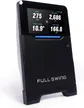 Best premium with no subscription: 16 metrics including face angle, about $3,995.95Full Swing KITRadar · behind the ball · 16 ft+ room depth8.2Price tier: PremiumCheck price
“Best launch monitor” depends almost entirely on where you’ll use it. A unit that’s perfect hitting into a garage net can be a poor base for a projector simulator, and a great indoor camera box can’t go to the range at all. This guide sorts the 16 monitors we track by the job you want done, then shows what each costs over three years once plans are added.
Everything here is research-based. We haven’t tested these units ourselves, so test results name the outlet that ran them, and accuracy figures from makers are labelled as maker claims. Prices are from Amazon on November 12, 2026, and several are early Black Friday prices that will change.
Quick picks by use case
| Use case | Our pick | Why | Price | Also consider |
|---|---|---|---|---|
| Indoor simulator | Mevo Gen2 | Measured spin, putting, GSPro/E6/Awesome Golf, no plan | ~$1,149 | EYE MINI LITE |
| Net practice | SC4 PRO | Built-in screen, voice readout, no subscription | ~$499.99 | Garmin R10 |
| Range and home, budget | Garmin R10 | 10-hour battery, IPX7, club path and face | ~$499.99 | MLM2PRO |
| Short room | Bushnell Launch Pro | Beside the ball, 13 ft minimum | ~$1,995 | SkyTrak+ |
| Measured spin on a budget | MLM2PRO | RPT-ball spin, two cameras | ~$549.98 | MLM2XPRO |
| No subscription, premium | Full Swing KIT | 16 metrics incl. face angle, no plan | ~$3,995.95 | Mevo Gen2 + Pro Package |
Best for an indoor simulator: FlightScope Mevo Gen2
For a room with a projector and impact screen, the Mevo Gen2 does more for less ongoing money than anything else. It measures spin, it putts, and GSPro, E6 Connect and Awesome Golf connect with no FlightScope plan. Breaking Eighty found about 7 in 10 indoor shots within 1–2 yards and 200 rpm of a Trackman, with occasional drives 5–7 yards off.
Two things to plan for: FlightScope wants 7–9 ft between the unit and the ball and at least 8 ft of ball flight, so about 15–17 ft of depth. And indoor spin needs the included aluminum dots or Titleist RCT balls (a 12-pack of Pro V1 RCT is about $74.99). Club path and face angle are part of the one-time Pro Package; the Pro Package bundle was about $1,748. Check the Mevo Gen2 price.
If your sim is a permanent room with a gaming PC, the Uneekor EYE MINI LITE (about $1,699) is the camera alternative: Breaking Eighty measured spin within 100–200 rpm of a Trackman. It needs Uneekor’s $199/yr Pro tier before GSPro connects.
Best for net practice: Voice Caddie SC4 PRO
If you’ll mostly hit into a net and want numbers without a phone, the SC4 PRO shows eight metrics on its own screen, reads them aloud and comes with a remote. There’s no subscription: a 3D driving range and 5 E6 Connect courses are included. Breaking Eighty calls it the best personal launch monitor under $500, and Plugged In Golf found it in line with a GCQuad indoors on “virtually every shot” except spin.
It’s a practice tool first. Club data stops at club speed and smash factor, spin can miss by 2,000–3,000 rpm (Breaking Eighty), and GSPro doesn’t support it. Voice Caddie’s setup is 5 ft behind the ball and 9–10 ft to the net, so 13–15 ft total, the shortest radar setup here. Pair it with the GoSports 10 × 7 ft net (about $89.99) or the Spornia SPG-7 with ball return (about $349.99). Check the SC4 PRO price.
Best for the range and home on a budget: Garmin Approach R10
The R10 is small, IPX7 waterproof and runs up to 10 hours, so it’s the easiest unit to carry between the garage and the range. It reads club path, face angle and attack angle in the free app and records swing video. Plugged In Golf found it often in line with a pro unit outdoors and less often indoors, with spin reading high on wedges and mishits because it’s calculated rather than measured.
Courses are $99.99 a year through Garmin Golf’s Home Tee Hero, and GSPro, E6 and Awesome Golf are supported. Check the R10 price.
Best for short rooms: Bushnell Launch Pro
Radar units need space behind you; cameras beside the ball don’t. The Bushnell Launch Pro needs at least 13 ft of depth by Bushnell’s figures, works outdoors on a 6-hour battery, and uses the same three cameras as the Foresight GC3. Plugged In Golf saw its ball speed typically match a GCQuad exactly.
It’s also the most subscription-heavy pick: Foresight+ Silver plus Course Pass is about $494 a year, and third-party software needs Gold at $599. On a tighter budget, the SkyTrak+ at about $995 also sits beside the ball (SkyTrak’s minimum bay is 12 ft long), but new buyers get SkyTrak’s own software only. More options are in best launch monitors for small rooms. Check the Launch Pro price.
Best measured spin on a budget: Rapsodo MLM2PRO
The MLM2PRO combines radar with two cameras and measures spin when you hit Rapsodo RPT balls. Breaking Eighty measured average carry errors under 2 yards for gap wedge and 7-iron indoors against a Trackman, and Plugged In Golf saw spin within 200 rpm of a GCQuad.
The membership is the catch. Free mode is practice only; spin, club data, courses and third-party links need Core at $199.99 a year. RPT balls are sold only by Rapsodo. If you want putting, the MLM2XPRO adds it for about $350 more. Check the MLM2PRO price, or compare it in Garmin R10 vs Rapsodo MLM2PRO.
Best premium with no subscription: Full Swing KIT
The Full Swing KIT shows 16 metrics, including face angle and face-to-path, in its app with no unlock and no Full Swing plan. GSPro and E6 Connect work without a Full Swing fee, so the only ongoing cost is the simulator license you choose. Golf Monthly said it never missed a shot; Plugged In Golf found distances and launch in line with a GCQuad and indoor spin less consistent.
It needs 16–20 ft of depth indoors and RCT balls are recommended for indoor spin. Check the KIT price.
Cheapest camera route into GSPro: Uneekor EYE MINI CORE
One more use case worth calling out: you have a dedicated indoor room and a gaming PC, and you mainly want accurate ball flight in GSPro. The EYE MINI CORE at about $999 uses the same twin infrared cameras as the EYE MINI LITE, reads any ball with no markings, and sits beside the ball. Breaking Eighty’s advice is to buy the CORE if you mainly want sim play and ball flight.
It has no club data unless you pay a one-time $1,500 unlock, it’s Windows-only over Ethernet with no battery, and GSPro needs Uneekor’s $199/yr Pro tier on top of GSPro’s $250. Uneekor also wants a room at least 13 ft wide, 15 ft deep and 10 ft high. Check the CORE price.
What each costs over three years
Sticker price is only part of it. The chart adds the cheapest course plan for three years to each monitor’s Amazon price (with the first year counted as free where the listing includes it).
Third-party software such as GSPro ($250/yr) is extra and not included here. Price your own build in the setup cost builder.
A few numbers stand out. The R10 comes to about $800 with Garmin Golf for three years. The MLM2PRO reaches about $1,150 with Core, the same as a Mevo Gen2 that needs no plan. The Bushnell Launch Pro comes to about $3,477 with Silver and Course Pass. The full breakdown, including GSPro all-in costs per brand, is in launch monitor subscription costs.
Radar, camera or both
The technology mostly decides placement. Radar units sit behind you and track the ball’s flight, so they need depth. Camera (photometric) units sit beside the ball and photograph it at impact, so they fit shorter rooms; some, like the Uneekor EYE MINI units and Bushnell LPi, are indoor-only boxes. Hybrids mix the two.
Sits 5–10 ft behind the ball and tracks it in flight. Great outdoors; indoors it sees only a few feet of flight before the screen, so spin is often calculated or needs metallic dots or RCT balls.
Garmin R10, SC4 PRO, Full Swing KIT · needs ~13–20 ft of depthSits beside the ball and photographs it (and the club) at impact, so spin is measured in the first inches. Ideal for short rooms; it has to move sides for left-handed golfers.
Bushnell Launch Pro, Foresight GC3, Uneekor EYE MINI, Garmin R50 · ~12–15 ftCombines both. Rapsodo and FlightScope sit behind the ball and use cameras for alignment, spin or video; SkyTrak sits beside the ball with radar helping the cameras.
MLM2PRO / MLM2XPRO, Mevo Gen2 (behind) · SkyTrak+ / ST MAX (beside)Full explanation in radar vs photometric launch monitors.
Our radar vs photometric explainer covers the trade-offs in detail.
How to choose
- Measure your room. Depth from screen or net to back wall is the number that rules units out. Try the room size checker.
- Decide on software. If you want GSPro, skip SkyTrak and the SC4 PRO.
- Price three years. Add the plan you’ll actually use. If this is your first launch monitor, our guide to the best launch monitor for beginners covers which data and plans a new golfer needs.
- Then the rest of the setup. A simulator also needs a screen, mat and projector; best golf simulators 2026 prices complete builds.
The launch monitor matcher filters all 16 models by budget, room depth and the features you need.
Frequently asked questions
What is the best launch monitor for home use?
Which launch monitors work without a subscription?
Is the Garmin R10 good enough for indoor use?
Can I use one launch monitor at home and at the range?
Sources
- FlightScope: FAQs · checked 2026-11-12 — The Mevo Gen2 sits 7–9 ft behind the ball and needs at least 8 ft of ball flight indoors; aluminum dots or RCT balls are needed for accurate indoor spin.
- Plugged In Golf: Swing Caddie SC4 PRO review · checked 2026-11-12 — Best value in its range; in line with a GCQuad indoors on virtually every shot, with only spin ever significantly off.
- Breaking Eighty: Voice Caddie SC4 PRO review · checked 2026-11-12 — Called it the best personal launch monitor under $500; spin was occasionally off by 2,000–3,000 rpm.
- Plugged In Golf: Garmin Approach R10 review · checked 2026-11-12 — Outdoors the R10 was often in line with a pro unit, indoors less often; spin read high on wedges and mishits.
- Breaking Eighty: Rapsodo MLM2PRO review · checked 2026-11-12 — Indoors with RPT balls, average carry error was under 2 yd for gap wedge and 7-iron and about 5 yd for driver versus Trackman; the subscription is all but essential.
- Bushnell Golf: Launch Pro buyer's guide · checked 2026-11-12 — The Launch Pro needs at least 13 ft of depth and 6 ft of width; 14 × 6 × 7 ft is recommended for a net.
- Plugged In Golf: Full Swing KIT review · checked 2026-11-12 — Little to no difference from a GCQuad on distances and launch; spin was less consistent.
Get new guides by e-mail
One short e-mail when Home Golf Simulator Guide publishes a new guide. No spam, no sharing your address, and you can unsubscribe in one click.