Best Launch Monitors for Small Rooms and Low Ceilings (2026)
Our top picks
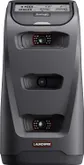 Best for small rooms: GC3-grade cameras beside the ball, 13 ft minimum depth, about $1,995Bushnell Launch Pro Circle B EditionCamera (photometric) · beside the ball · 13 ft+ room depth8.0Price tier: Mid-rangeCheck price on Amazon
 Best budget short-room unit: 12 ft minimum bay, face and path data, about $995SkyTrak+ (previous generation)Radar + camera · beside the ball · 12 ft+ room depth7.6Price tier: BudgetCheck price
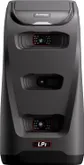 Cheapest GC3 cameras for an indoor room: about $1,354.17Bushnell Launch Pro i (LPi) Circle B EditionCamera (photometric) · beside the ball · 13 ft+ room depth7.6Price tier: Mid-rangeCheck price
 SkyTrak's current model with a year of courses: about $1,695SkyTrak ST MAXRadar + camera · beside the ball · 12 ft+ room depth7.5Price tier: Mid-rangeCheck price
 Best all-in-one for a short room: runs the sim on the unit, about $4,999.99Garmin Approach R50Camera (photometric) · beside the ball · 13 ft+ room depth8.4Price tier: PremiumCheck price
Most people who give up on a home simulator don’t run out of money; they run out of room. A spare bedroom or basement corner can be wide enough and almost tall enough, but too short from wall to wall for a launch monitor that sits behind you. This guide covers the units that fit shorter rooms, what “short” really means for each, and where a low ceiling is the real problem.
As with the rest of the site, this is research-based: the distances below are the makers’ own published figures, and test results name the outlet that ran them. Prices are from Amazon on November 12, 2026.
Why depth decides which monitor you can use
A room’s usable depth is the distance from the wall behind your screen to the wall behind you. Carl’s Place breaks a 15 ft minimum into 1 ft behind the screen, 10 ft from the screen to the ball and 4 ft of swing room behind the ball, with 18–20 ft as ideal.
Radar units have to sit behind you on the target line, and they need distance to track the ball. Garmin puts the R10 6–8 ft behind the tee, FlightScope puts the Mevo Gen2 7–9 ft back, and Full Swing puts the KIT 8–10 ft back. Camera (photometric) units sit beside the ball, so the space behind you only has to cover your backswing. GolfBays sums it up as 4 m of depth for camera units against 5 m for radar.
Tap a bar for the comfortable depth. Add about a foot behind the screen for bounce-back. Check your own room in the room size checker.
The chart shows each model’s minimum and comfortable depth, built from the makers’ published distances. Our radar vs photometric explainer covers the technology side.
Depth by model
| Model | Placement | Minimum depth | Comfortable | Price |
|---|---|---|---|---|
| SkyTrak+ | Beside | 12 ft | 17 ft | ~$995 |
| SkyTrak ST MAX | Beside | 12 ft | 17 ft | ~$1,695 |
| Bushnell Launch Pro | Beside | 13 ft | 18 ft | ~$1,995 |
| Bushnell LPi | Beside | 13 ft | 18 ft | ~$1,354.17 |
| Foresight GC3 | Beside | 13 ft | 18 ft | ~$3,799–3,999 |
| Garmin R50 | Beside | 13 ft | 15 ft | ~$4,999.99 |
| SC4 PRO | Behind | 13 ft | 15 ft | ~$499.99 |
| Garmin R10 | Behind | 14 ft | 16 ft | ~$499.99 |
| EYE MINI LITE / CORE | Beside | 15 ft | 17 ft | ~$999–1,699 |
| Mevo Gen2 | Behind | 15 ft | 17 ft | ~$1,149 |
| MLM2PRO / MLM2XPRO | Behind | 15.5 ft | 16.5 ft | ~$549.98–899.99 |
| Full Swing KIT | Behind | 16 ft | 20 ft | ~$3,995.95 |
Two caveats. Foresight and Garmin don’t publish room sizes for the GC3 and R50, so we use Bushnell’s figures for the identical Launch Pro hardware and, for the R50, Garmin’s 8 ft tee-to-net plus Carl’s Place’s swing room. And the Uneekor units sit beside the ball but Uneekor still asks for 15 ft of depth, 13 ft of width and a 10 ft ceiling.
Bushnell Launch Pro: Best for small rooms
The Launch Pro is the short-room unit we’d buy first. Bushnell’s minimum is 13 ft of depth and 6 ft of width, with 14 × 6 × 7 ft recommended for a net and 18 × 12 × 9 ft for a full simulator. It sits about 2 ft from the hitting area, raised to mat height, and uses the same three cameras as the Foresight GC3. Plugged In Golf saw ball speed typically match a GCQuad exactly, with spin within tens of rpm, and Breaking Eighty calls it the most accurate launch monitor it has tested.
Budget for Foresight+: Silver plus a Course Pass is about $494 a year, and GSPro needs Gold at $599 plus GSPro’s $250. Club data needs stickers, and the hitting zone is small (7 × 10 in). Check the Launch Pro price, or compare it with SkyTrak in SkyTrak+ vs Bushnell Launch Pro.
SkyTrak+: Best budget short-room unit
SkyTrak’s minimum hitting bay is 12 ft long, 10 ft wide and 9 ft high, the shortest published figure here. SkyTrak itself makes the point that its unit “sits next to the ball vs other launch monitors that require up to 8’ behind.” The SkyTrak+ measures spin and gives path, face angle and face-to-path without stickers, and Breaking Eighty found carry and spin “right in line” with a Trackman.
New buyers get SkyTrak’s software only (GSPro lists SkyTrak as unsupported), courses cost $299.99 a year, and the warranty is 6 months or 25,000 shots. Check the SkyTrak+ price.
The other side-of-ball options
- SkyTrak ST MAX (about $1,695): the same 12 ft bay and, per Breaking Eighty, identical hardware to the SkyTrak+, plus GOLFTEC speed training and a year of Core: Foresight in the box. Check the ST MAX price.
- Bushnell LPi (about $1,354.17): the Launch Pro cameras in an indoor-only, mains-powered box for a permanent room. Same Foresight+ costs, and Plugged In Golf advised against it. Check the LPi price.
- Foresight GC3 (about $3,799–3,999): Golf Monthly calls its accuracy best-in-class, but SI and Breaking Eighty describe the same hardware as the Launch Pro for about $2,000 more. Check the GC3 price.
- Garmin R50 (about $4,999.99): sits about 1.5 ft to the side of the tee and runs the simulator on its own 10-in screen with HDMI out. Carl’s Place allows a 9 ft swing area around the golfer for the R50 (7 ft for other units), so it still wants some width. Check the R50 price.
If you still want radar in a short room
The SC4 PRO is the shortest radar setup we track: 5 ft behind the ball (4 ft if space is tight) and 9–10 ft to the net, so 13–15 ft. It’s a practice unit without GSPro. Plugged In Golf also got consistent Garmin R10 data with only 6 ft from tee to net, below Garmin’s 8 ft, though that’s one reviewer’s result and not Garmin’s guidance.
Low ceilings and narrow rooms
A side-of-ball unit saves depth, not height. Carl’s Place puts the minimum ceiling at 8–9 ft with “limited swings” and recommends 10 ft or more; SkyTrak says 10 ft typically offers ample clearance and that many golfers find 9 ft enough. GolfBays gives 2.8 m (about 9.2 ft). Swing a driver in the room before you buy anything. If you can’t, plan to hit irons only.
Width matters more with side units, because left-handers have to move the unit to the other side. Uneekor says so explicitly, and SkyTrak suggests adding 1–2 ft of width for mixed-handed play. Carl’s Place puts width at 10 ft with an offset tee and 14 ft or more for a centered tee.
Mat height counts too. A 2.5-inch foam mat like the SIGPRO Softy means raising a SkyTrak, Bushnell, Uneekor or R50 to mat level.
Projectors in short rooms
Short rooms need short-throw projectors. Distance equals screen width times throw ratio, so the 0.5-ratio Optoma GT1080HDR (about $799) fills a 10 ft wide image from about 5 ft away. Rain or Shine Golf suggests the projector sit about 6–8 ft from the screen in a 15 ft room. Run your numbers in the projector throw calculator, and see our projector guide.
What a short-room build costs
Using our accessory prices from November 12, 2026, a SkyTrak+ with the ZivPlay 4:3 enclosure ($379.99), GoSports Elite mat ($213.62) and GT1080HDR comes to about $2,387.61. The same parts around a Bushnell Launch Pro total about $3,387.61, before Foresight+ plans. ZivPlay says its enclosure needs a 9 ft ceiling.
One thing to watch: complete packages can need more room than the monitor inside them. SkyTrak’s planner says the ST MAX Studio 10 and Studio 12 need a room at least 16 ft deep, even though the ST MAX alone works in a 12 ft bay, and Full Swing’s 12 ft KIT Studio needs 18 ft. In a short room, building your own setup around a side-of-ball unit is usually the better fit. Price it in the setup cost builder.
Check your room before you buy
Enter your measurements in the room size checker. Some starting points:
- A 13 ft deep spare room with a 9 ft ceiling: check a side-of-ball setup.
- A 12 ft basement with an 8.5 ft ceiling and a 5 ft 10 in golfer: see what fits.
- A 16 ft garage bay for a left- and right-handed household: compare radar units.
The room size guide walks through measuring, and the garage guide covers bays you still park in.
Frequently asked questions
What is the best launch monitor for a small room?
How deep does a room need to be for a golf simulator?
What ceiling height do I need for a golf simulator?
Can a radar launch monitor work in a short room?
Do side-of-ball launch monitors work for left-handed golfers?
Sources
- Carl's Place: Measuring your space for an indoor golf simulator · checked 2026-11-12 — Ceiling 8–9 ft minimum with limited swings, 10 ft+ recommended; depth 15 ft minimum, 18–20 ft ideal; width 10 ft with an offset tee, 14 ft+ centered.
- SkyTrak: Hitting bay requirements · checked 2026-11-12 — Minimum hitting bay 12 ft long × 10 ft wide × 9 ft net height; 15 × 15 × 10 ft recommended.
- SkyTrak: Plan your space · checked 2026-11-12 — A 10 ft ceiling typically offers ample clearance and many golfers say 9 ft is enough; suggested width 12 ft plus 1–2 ft for mixed-handed play; SkyTrak sits next to the ball.
- Bushnell Golf: Launch Pro buyer's guide · checked 2026-11-12 — At least 13 ft of depth and 6 ft of width; 14 × 6 × 7 ft recommended for a net, 18 × 12 × 9 ft for a full simulator.
- Uneekor: How much space do I need for a golf simulator? · checked 2026-11-12 — Room at least 13 ft wide × 15 ft deep × 10 ft high, with the hitting area 10–12 ft from the screen; 15 ft width for golfers 6 ft or taller.
- Plugged In Golf: Bushnell Launch Pro Circle B review · checked 2026-11-12 — Ball speed typically matched a GCQuad exactly, spin within tens of rpm and launch within 1 degree.
- GolfBays: Golf simulator room size guide · checked 2026-11-12 — Minimum 2.8 m ceiling and 3 m width; 4 m depth for camera units versus 5 m for radar.
Get new guides by e-mail
One short e-mail when Home Golf Simulator Guide publishes a new guide. No spam, no sharing your address, and you can unsubscribe in one click.